• Skip to primary navigation
  • Skip to main content
Keeping up with Everything but the Joneses with Terri

Keeping up with Everything but the Joneses with Terri

  • Home
  • Show Search
Hide Search

Terri Harrah

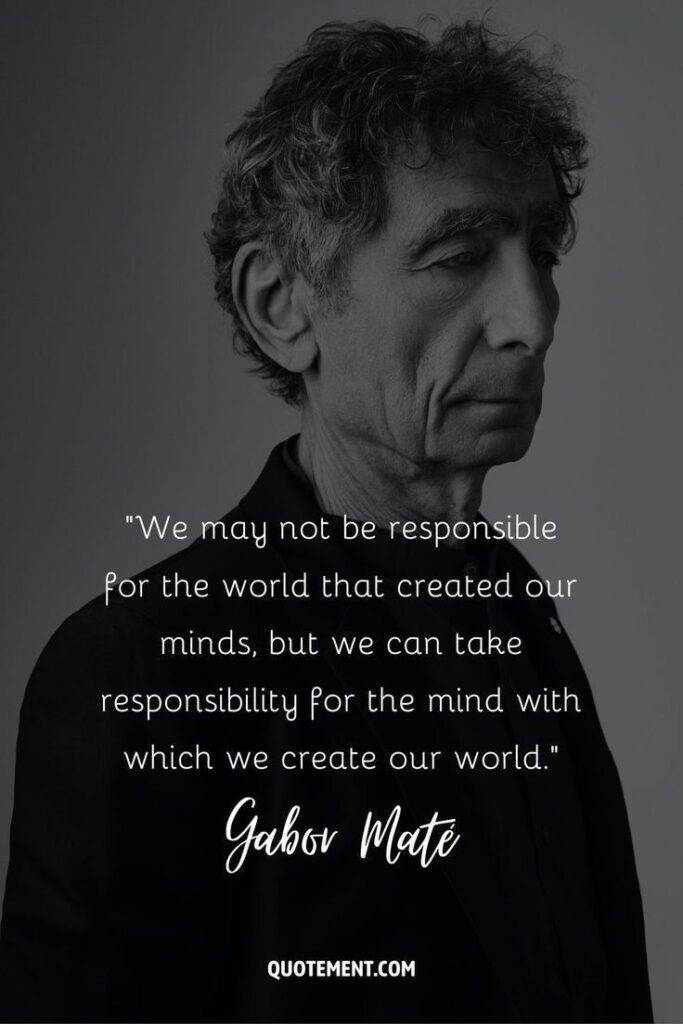
Gabor Mate – Everything recommend #1

“The question is not why the addiction, but why the pain.”

A renowned speaker, and bestselling author, Dr. Gabor Maté is highly sought after for his expertise on a range of topics including addiction, stress and childhood development.

Rather than offering quick-fix solutions to these complex issues, Dr. Maté weaves together scientific research, case histories, and his own insights and experience to present a broad perspective that enlightens and empowers people to promote their own healing and that of those around them.

After 20 years of family practice and palliative care experience, Dr. Maté worked for over a decade in Vancouver’s Downtown East Side with patients challenged by drug addiction and mental illness. 

25′ Curated Christmas Playlist

Amazon Fashion Wins!

Flamingals Straight Leg Button Fly Jeans for Women!

And here is what they look like on me!

Hollywood is at it again, with Group Think!

Terri Harrah 12/11/2025

As we watch the Democratic Party continue to be hijacked by the Far Left, the Golden Globes just announced their nominees, including a brand-new category for streaming podcasts. And, shocker, the micro-bubble of Hollywood’s elite—obsessed with staying safely left and never “seemingly” to offend anyone—left out the major players who actually dominate the medium. Joe Rogan, Ben Shapiro, & Megyn Kelly, who did not have a chance in this highly censorious pearl-clutching new wave of extremism.

Megyn Kelly respectfully declined an invitation to meet with the shiny-new Dick Clark Productions 400 voters who now run the outcome of the Golden Globe nominees. Ben Shapiro campaigned with the same intensity he talks with (which is saying something), and still got iced out. Tucker Carlson? Also missing—either he lightly declined, or they just pretended he did not exist, as they do with the rest of America. Flyover states much? And the most significant omission of all: Joe Rogan.

And the irony? These people who scream about moral ideological superiority, and ring kissing are the ones doing the most of it. To be considered for this category, one had to meet with the voters; this was a mandatory sit-down. 

So, who made the Best Podcast category?

We’ve got Dax Shepard as the resident Armchair Expert, whose pro-vaccine interview with Prince Harry contained more misinformation about the COVID-19 vaccine than facts. Neither has recanted their misinformed statements. These two actually criticized Joe Rogan for his COVID-19 vaccine information. Joe turned out to be right. It makes you wonder if Dax or Prince Harry received any compensation from Pfizer or others. Not an accusation, just a wonder.

Next, we’ve got Call Her Daddy, a popular relationship and human sexuality show. I have to admit, the only time I watched this show was when Alex interviewed Kamala Harris. It was kind of a non-interview for me; I thought it would reveal more about Harris, but all it did was circle identity politics ad nauseam.

The Mel Robbins podcast is next, and I will give credence as she is singlehandedly resuscitating the nation with Alanon ideas wrapped in her Let Them theory. It takes an entire podcast and book to unwind the insanity people have created in their own lives over the last 6 years. And so many need this help!! So thank you, Mel, and I really love how you have repackaged common sense. I hope this gets the win out of all of them.

I never knew Amy Poehler had a podcast, so there is that. I have also never watched the last two, SmartLess with Jason Bateman & NPR’S Up First. It is safe to assume these shows are not threatening to the sensitivities of the Hollywood elite.

I speak with at least a tiny sliver of authority here. I’ve worked in the film industry, and my husband previously worked on the music for the Golden Globes over our combined twenty-plus years. It used to mean something. It used to be a place where different ideas and perspectives were not only allowed but actually valued, where art would stretch us and open our minds to new points of view, not corral us into the dead-end cul-de-sac of appeasing groupthink politics. But like everything the modern left touches, the Golden Globes have been boiled down to one microscopic point of view, at least in the podcasting realm, where they seem to be slipping further and further behind the culture.

And yet—shockingly—there are a few bright spots. It is not All Bad!!

Where the Golden Globes got it right this year: Billy Bob Thornton’s well-deserved nomination for his performance in the hit series Landman. Thornton’s gritty turn as Tommy Norris is filled with dread, depression, sweeping family issues with a doggedness not seen in a while.

Next, the Globes also gave nods to Billy Crudup for The MOURNING Show—yes, spelled MOURNING, the way it actually feels to watch that show. Crudup gives a wildly emotionally layered and fun performance inhabiting Cory Ellison. I have a review of this show coming shortly. Following is Michelle Williams, who was excellent in Dying for Sex. This is a rough watch if you or anyone you know has cancer, but Michelle’s performance is so human and real that it could be worth a binge. Have the ice cream handy and a box of Kleenex. I sobbed. Rhea Seehorn’s nomination for Pluribus is hopeful, and a shout-out to Kathy Bates for Matlock.

Lastly, a definite shout-out to Leonardo DiCaprio in One Battle After Another—another rare moment where the Globes actually made narrative sense. You can read my critique of that here. DiCaprio is unlike anything I have ever seen him in. Benecio Del Toro is also very deserving of his nomination. Now for Seth Rogan, I am so glad he received some nod. Getting a Best Actor for Television & Musical Comedy nod is great, but The Studio is his baby. He created the show, and if you haven’t watched it yet, go now! It truly gives the most heightened reality of working in the film industry and all the chaos that ensues.

Before I end this rant, it would be a huge oversight not to mention Ali Larter, who plays Angela Norris—the sharp, unpredictable, and often riotously compelling ex-wife of Tommy on Landman, a HUGE oversight by the Golden Globe voters, HUGE MISTAKE! She’s an absolute force on screen and brings a dangerous, unpredictable energy to the show as she steals scene after scene!!!

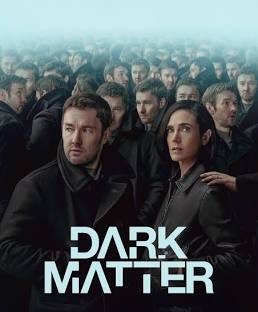
Dark Matter

Terri Harrah 12/7/2025

Today I’m talking about the series Dark Matter on Apple TV+. I started watching it because of the talented Joel Edgerton (a current Golden Globe nominee) and Jennifer Connelly, who has been an icon since Labyrinth & was brilliant in A Beautiful Mind (where she met her husband, Paul Bettany). Joel Edgerton is one of those rare quadruple-threat artists — writer, producer, director, actor — who is consistently excellent in everything he does. If you haven’t seen his Australian indie work, put that on your list.

In Dark Matter, Edgerton plays Jason Dessen, a physicist and family man, and Jennifer Connelly plays Jason’s wife Daniela Dessen, a talented artist. They have a teenage son, Charlie, played beautifully by Oakes Fegley. The supporting cast — Alice Braga, Jimmi Simpson, Dayo Okeniyi — all add depth, but the heart of the series is this family and the choices that shaped them.

The premise is gripping: Jason is abducted one night and wakes up in an alternate version of his life — a reality where he never married Daniela, never became a father, and instead poured everything into scientific ambition. In this other timeline, the love and family he could have had simply don’t exist. And when this alternate version of Jason realizes what he missed, he tries to steal the life of the Jason who did choose love.

This whole “what if” concept is something very human. What if I had turned left instead of right in 2000? Some people are more concerned with this idea than others, but it is the human condition to ponder “What If’s.”

And it hit me personally.

I’ve been in a committed, monogamous relationship for 25 years. And anyone who’s done that kind of long haul knows: it changes you. Raising kids, staying through the hard seasons, showing up when it’s uncomfortable — it softens you. It grows you. It pushes you out of self-focus and into something bigger. That’s what happened to me. I’m a better person because of the path I chose — and watching Dark Matter show both versions of Jason, the one with family and the one without, felt unusually honest and real and a much-needed element to entertainment. Family is good, and choosing to have children is good. Staying is good.

It actually reminded me so much of one of my all-time favorite films: The Family Man with Nicolas Cage.

Both stories ask the same question:

What if you had taken the other path — the road you didn’t choose?

And who would you have become?

If The Family Man is the emotional blueprint, Dark Matter is the high-concept, quantum-physics version of it. Both explore identity, love, and how relationships reshape who we are at our core.

This show also does not feel politically ideological. There’s no heavy-handed messaging, no cultural agenda being shoved in your face, no “here’s the moral you MUST take from this.” And I cannot tell you how refreshing that is. There is a very subtle and positive message of love and the simple choice of family, your special place in the world, being the things you have overcome with your very specific loved ones, and the security of this trust, and memory building events that truly create our realities.

Dark Matter lets the story breathe; it lets these ideas unfold. It allows the characters to be human, and it trusts the audience to think for themselves. The Art Direction is not to be underestimated here either; the subtle differences created to guide the viewer into the correct reality are masterfully painted.

If I were rating it, I’d give it four stars. I’d go five, but there are a few confusing parts — moments where my husband and I literally paused and looked at each other like, “Wait… who brought that box?” or “How did THAT version get here?” But even with that, the writing is strong, the acting is phenomenal (especially the multiple-version performances), and you will not be disappointed. I am leaving a lot out to avoid spoilers.

What a fun gig for the actors — playing different shades and versions of themselves. They handle it beautifully. There is some violence, but nothing worse than most dramas, and probably not something young kids should watch. But overall? This is absolutely a must-watch. It’s thoughtful, emotional, well-acted, and refreshingly free of ideological noise.

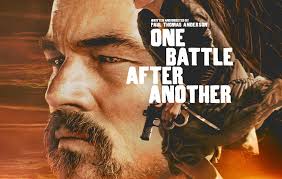
One Battle After Another

Review by Terri Harrah — October 28, 2025

Paul Thomas Anderson’s new film One Battle After Another almost seems like it could have been a three-part series.

The film opens with an ambitious, Black Panther–type female lead, Perfidia Beverly, excellently executed by actress Teyana Taylor. who seems to be the spearhead of something reminiscent of The Weather Underground. 

There are multiple names used for the group she’s leading, but essentially, she’s bombing buildings across California. Leonardo DiCaprio plays her bombing partner, and nothing upsets the apple cart of a true revolution quite like having a baby. This could have been a great story—exploring how a revolutionary navigates motherhood. It could have been funny, dark, or both. But that’s not the story we get. Instead, we follow Leonardo DiCaprio’s character as he slides into low to mediocre fatherhood as his partner escapes to Mexico after exchanging sexual favors with Sean Penn’s military character, securing her freedom.

Fast-forward many years later: the baby is now a teenager, and Sean Penn’s character gets wind that he may be the father. Paul Thomas Anderson attempts to weave together these extreme personalities—Penn as a racist drawn to Black women, trying desperately to be accepted into a white men’s club within the government. There really isn’t enough here to hold any deep interest, as this song has been sung so often over the last decade that I started to lose interest.

At this point, I began to feel that both Penn and DiCaprio may have been punked by Anderson—who also wrote the film—to embody exaggerated archetypes. Both actors unabashedly lean left. DiCaprio plays the soft, aimless white man we see so much of in current pop culture, while Penn portrays the controlling, militaristic racist. I’ve seen these characters a thousand times before.

I think it would’ve been far more interesting if the original female lead had remained central to the story. That said, the actress (Chase Infiniti) playing the daughter is fantastic—an absolute standout. She delivers a genuine, heartfelt performance that blends in a much-needed softness to the film.

DiCaprio’s performance, meanwhile, is deeply consistent and very funny. He’s not usually known for comedy, but he handles the humor here surprisingly well. Sean Penn also gives a layered performance—you can see why he was drawn to the role, It is as if he is working something out through the character, perhaps exorcising some demons of his own. Or maybe it feels less like he is playing this part and more like he is purging it, as his way of confronting what he believes has gone wrong with the archetype of the righteous military man in authority. 

But I can’t help but notice the irony: in this world of left-leaning virtue signaling, here we are again with three white men—the writer/director and two stars—telling a story about a Black woman who disappears in the first quarter of the film. If we are adjusting to their world view. Maybe I missed some deeper creative irony there that more devoted fans picked up on, but as someone who’s not into political extremism, none of it felt fresh. It seemed to be repeating the same message we’ve heard endlessly.

Benicio Del Toro enters the film halfway through, and his performance is a welcome help to affable and fumbling DiCaprio. His chemistry with DiCaprio brings new energy. There’s a thrilling sequence where they’re racing through a small town, trying to avoid capture. Anderson directs the scene with quick pacing, seemingly long shots, sharp dialogue, and humor. The underlying thread throughout the movie involves immigration—essentially an underground network moving migrants to safety.

Another standout sequence is a car chase through the rolling hills of the California desert. The cinematography is gritty and exciting. You feel like you’re inside the car, tense and uncertain about what lies just over each hill. The timing, editing, and direction are excellent.

Overall, the acting across the board is top-tier. Every performer stays fully committed to their character.

Now, from what I understand—though I haven’t read any other reviews—this film is being called Paul Thomas Anderson’s worst. I don’t know if that’s fair. But if you ask me whether it’s worth watching, I’d say this: if you want your political biases confirmed, this movie will do that for you. If not, you’ll likely find it frustrating but entertaining.

By the end, I wasn’t sure what Anderson was trying to say. Was he implying that men aren’t strong anymore unless they’re in the military? That all military men are racist? That all mixed-race young women should join the revolution? That all Black women belong in the revolution? The film’s point of view felt confused—just like its characters.

As I said at the beginning, I couldn’t tell if Anderson was mocking the whole situation or simply saying that the battle will always go on because injustice always exists. Probably more of the latter, given the title. The story only really ties back to that idea when the young girl declares she’s heading to protest in Portland, Oregon—which, frankly, I found laughable.

If the movie were poking fun at protesters in Portland, that would’ve been clever, but I don’t think that’s what it was doing. One Battle After Another seems to take itself seriously, attempting to balance drama and satire—but it misses the mark at essential moments. One last thing I will add is that one of my favorite films is MAGNOLIA. So I came into this film hopeful, and what I think I came out with is, yeah, the battle goes on. There is just no end; the immigration issue running in the background of the story is never resolved, and those people are left aimless even after they were technically “saved” or freed by the revolutionaries.

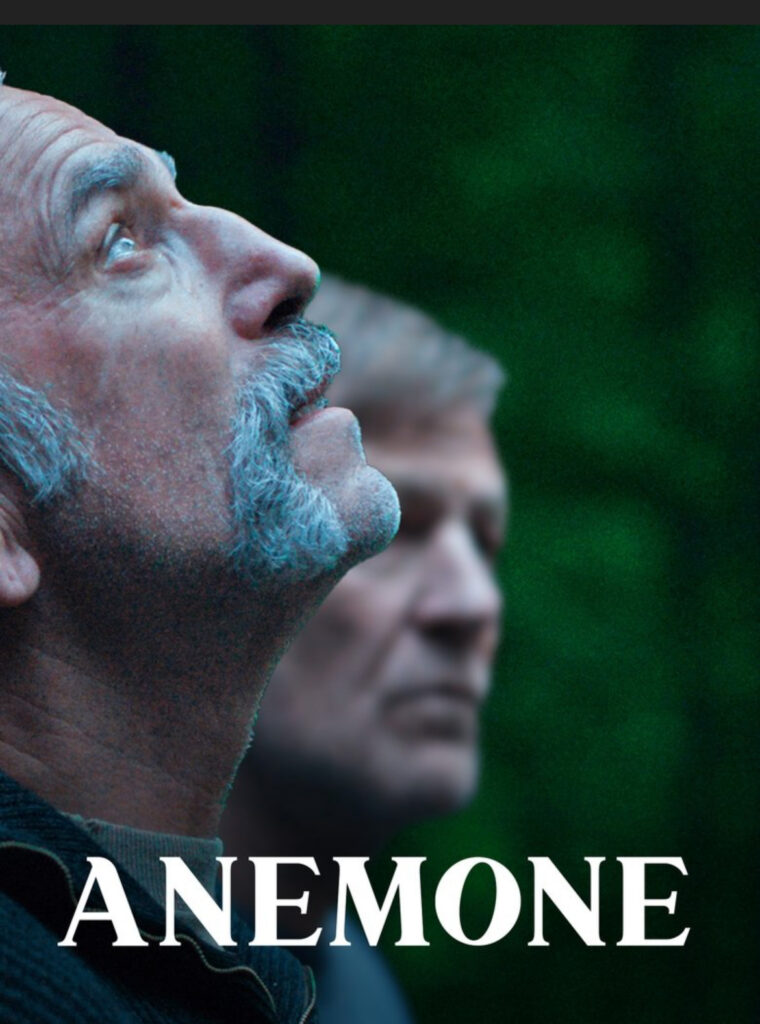
Anemone Review

Terri Harrah 10/20/25

As someone in the theater said after the screening, “Anenome is an art house film.” And in that sense, I got a wish—it felt like being transported back to the 1990s, when art house films were abundant, independent filmmakers were celebrated, and Marvel hadn’t yet taken filmmaking and flushed it into a leach field.

Anenome is not the best film I’ve ever seen, but it does something I haven’t experienced in a long time: it takes its time and treats its audience with respect. It doesn’t over-explain; in fact, it does quite the opposite. The first 10 minutes of the film leaves little to no dialogue. The cinematography is stunning—each shot feels like a canvas painting, lit with warmth & precision.

The opening sequence shows hand-drawn images of chaos, protest, and fear—an immediate reflection of what we are currently experiencing in the world if you are paying attention to the news. It then cuts to a breathtaking shot of a forest before narrowing in on a lone cabin, where a man (Daniel Day – Lewis) lives in deep suffering. What the film does brilliantly is it focuses on individual chaos and the deep generational damage that brings to those around it, when unhealed.

But this film does not ask us to pity him. Instead, it provokes frustration and even anger, making us hope he finally pulls himself together.

Sean Bean, in an almost wordless role, becomes a quiet witness to Daniel Day-Lewis’s lone wolf character—in that way only a brother can. It’s a very specific kind of family dynamic, and the film captures that unspoken language of siblings without hitting us over the head, its subtle and unique like most sibling relationships.

The deeper fascination here lies in the collaboration itself: Daniel Day-Lewis’s son, Ronan Day-Lewis, (Grandson of Arthur Miller) co-wrote the screenplay with him and also directed the film. I’m genuinely looking forward to seeing what comes next from Ronan.

Daniel Day-Lewis delivers a powerful performance as a bitter, angry, wounded middle-aged man in a way I haven’t seen portrayed so honestly in a long time. It’s hard to feel compassion for him because his anger is so consuming—and we all know someone like this. Someone seemingly unreachable & walled up. He inhabits that emotional landscape to perfect intended annoyance.

The film is worth watching if you’re an artist, a filmmaker, or simply craving something different—something that values atmosphere and emotional truth over exposition. True art is expressed here not only visually but in the performances of Daniel Day-Lewis, Sean Bean, and Samantha Morton, whose facial expressions convey things that acting school can’t teach.

There’s also a young actor who plays the son, Samuel Bottomley, giving a compelling performance. It’s a great role for him, as he rises to the occasion beautifully by delivering the truth as only children can, who have been forced to carry the sins of their fathers.

Instagram Facebook X YouTube

Keeping up with Everything but the Joneses with Terri

Copyright © 2026 · Log in

  • Home